Key Takeaways
- →An ARS 28-3511 Authorization Agreement is the legal foundation of every private property towing program in Arizona.
- →The agreement must specify what vehicles qualify for towing — unauthorized, abandoned, permit-expired, fire lane, or ADA violations.
- →The towing company's ADOT towing license number and insurance certificate should be attached to the agreement.
- →Photo documentation as a standard service should be explicitly stated in the contract — it protects both parties.
- →A 30-day termination notice period is typical — longer terms may benefit the property manager in exchange for additional services.
The towing authorization agreement you sign with a private-property towing company is one of the most consequential documents in your parking enforcement program. It defines who has authority to tow, under what circumstances, and who bears liability if something goes wrong. Yet many property managers sign these agreements without reading them carefully - or without knowing what to look for.
This guide covers the elements every solid towing contract should contain, the terms worth negotiating, and the red flags that indicate a towing company may not have your interests at heart.
This page is for general informational purposes only and does not constitute legal advice. Have any towing authorization agreement reviewed by your attorney before signing, particularly if your property is part of an HOA, a management portfolio, or a commercial development with complex lease terms.
What a Towing Authorization Agreement Actually Is
A towing authorization agreement (sometimes called a towing service agreement or private-property towing contract) is a written contract between you, as the property owner or authorized agent, and the towing company. It grants the towing company permission to remove unauthorized vehicles from your property and defines the terms under which that permission is given.
Under Arizona law, a towing company must have authorization from the property owner or their agent before removing a vehicle from private property. ARS 28-3511 is the primary statute governing private-property towing in Arizona, and it requires that this authorization be in place before any tow occurs. A properly executed written agreement satisfies this requirement and creates a clear record that can be cited if a tow is ever challenged.
10-Point Checklist: What Every Contract Should Contain
Contract Checklist - Review Before Signing
- 1Parties identified with legal names and addressesBoth the property owner/manager (with property address) and the towing company (with license number) should be fully identified.
- 2Scope of authorization - which lots, zones, and violation typesThe contract should list every area of the property covered and specify which types of violations authorize a tow (no permit, blocking fire lane, wrong zone, etc.).
- 3Towing company licensing and insurance certificatesArizona towing operators must be licensed. The contract should include license numbers and attach current certificates of insurance naming your property as an additional insured.
- 4Notification requirements and response time guaranteesSpecify how quickly the towing company must respond to a call and how you will be notified after a tow occurs (date, time, vehicle description, law enforcement notification confirmation).
- 5Documentation and photo requirementsThe contract should require the towing company to photograph violations before towing, document law enforcement notifications, and provide copies of records upon request.
- 6Fixed fee schedule attached as an exhibitAll fees - towing, storage, administrative - should be listed in a signed exhibit. No fee increases without your written consent.
- 7No revenue sharing or kickback provisionsThe contract should not include any arrangement where you receive a payment per tow or where the towing company benefits financially in ways that create over-towing incentives beyond their stated fees.
- 8Indemnification and liability allocationThe towing company should indemnify you for tows they perform - you should not be liable for a wrongful tow that results from their error. Review this provision carefully with your attorney.
- 9Term, renewal, and termination provisionsOne to two years with a 30-day written notice termination right for either party is a reasonable starting point. Avoid auto-renewal for extended terms without your affirmative consent.
- 10Dispute resolution processThe contract should specify how disputes - between you and the towing company, or involving a vehicle owner - are handled, including who has standing to authorize a release and under what circumstances.
Key Terms to Negotiate Before You Sign
Most towing companies present a standard contract. That does not mean every clause is non-negotiable. Here are the terms worth pushing back on:
Minimum tow volume requirements. Some contracts include a clause requiring the property to maintain a minimum number of tows per month or quarter - and if you fall below that, you owe a fee or the contract terms change. This structure puts financial pressure on the towing company to tow even when it is not appropriate. Negotiate to remove it.
Indemnification scope. The towing company's indemnification of you should cover tows they perform under your authorization. But make sure the clause does not inadvertently make you responsible for your own negligence in authorizing tows. A balanced clause protects both parties from their own mistakes.
Patrol frequency and reporting. If the towing company will be conducting regular patrols (a good practice for active parking enforcement), negotiate the frequency in writing and require a written report for each patrol - even one with no tows. This creates a documented enforcement history that protects you.
Signage responsibility. Who installs and maintains compliant towing signs? Who bears the cost? Who is responsible if a sign is damaged or falls and a tow is challenged as a result? Get this in writing. See our guide to Arizona towing signage requirements for the statutory specifications.
Red Flags: Contract Terms That Should Worry You
Not all towing companies operate in the property manager's best interest. These contract provisions should raise a flag and prompt a harder conversation before signing:
- Kickback or revenue-sharing arrangements. Any structure where you receive a dollar amount per tow - or where the towing company reduces fees in exchange for exclusive access - can create legal liability for you under Arizona law and creates a clear over-towing incentive. Avoid these entirely.
- Blanket exclusive lockout provisions. Some contracts include language preventing you from calling another towing company under any circumstances. A lockout during a genuine emergency because your contracted company cannot respond is a real operational risk.
- Vague authorization language. A contract that authorizes the towing company to remove "any vehicle not in compliance with property rules" without defining those rules gives them enormous discretion and exposes you to disputes. Authorization should be specific.
- Unilateral fee adjustment rights. If the contract lets the towing company raise fees with 30 days' notice and your only option is to cancel the contract, that is not a negotiated agreement - it is a price ceiling on your exit cost. Push for fixed fees through the contract term.
- No-tow-no-pay structure for patrols. As noted above, compensation tied entirely to tow volume creates an incentive structure that can harm your residents and expose your property to over-towing complaints.
What Good Looks Like: Axle Towing's Approach
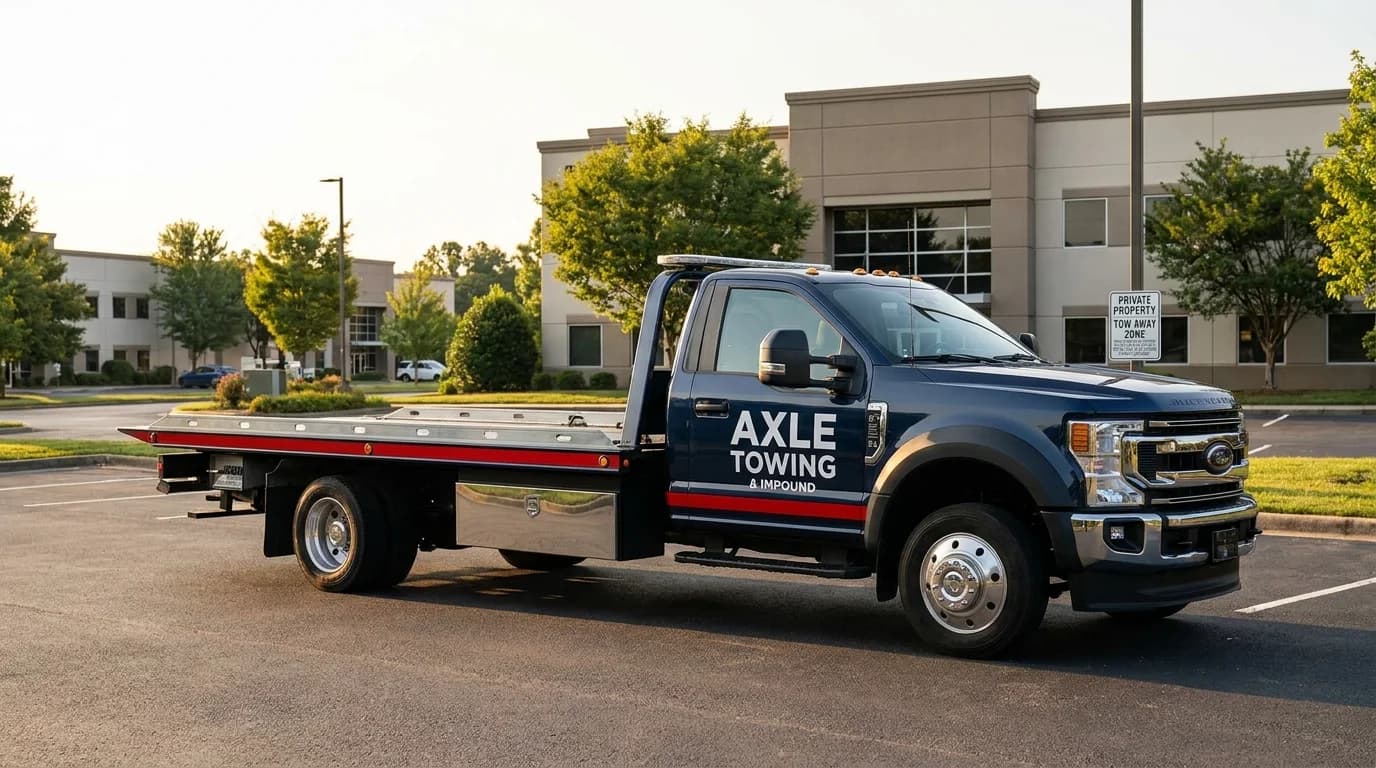
Axle Towing provides private property impound services across the Phoenix metro under transparent authorization agreements. We do not use minimum-tow clauses, do not share revenue with property managers, and provide written patrol reports after every patrol visit - even when no tow occurred.
Our agreements include fixed fee schedules attached as signed exhibits, response time guarantees, photo documentation requirements, and indemnification language that has been reviewed by our own legal counsel. We are happy to walk you through any provision before you sign.
For HOA boards evaluating their options, our HOA towing services page covers the specific considerations for community associations. For apartment and commercial properties, see parking enforcement and commercial property management towing.